
Grape guide
Grillo
Grillo is the most Sicilian white wine I know. It is usually linked to western Sicily; I wanted to plant it on the sands of Vittoria to find out what it could become here. Blues was the result.
A grape born in Sicily
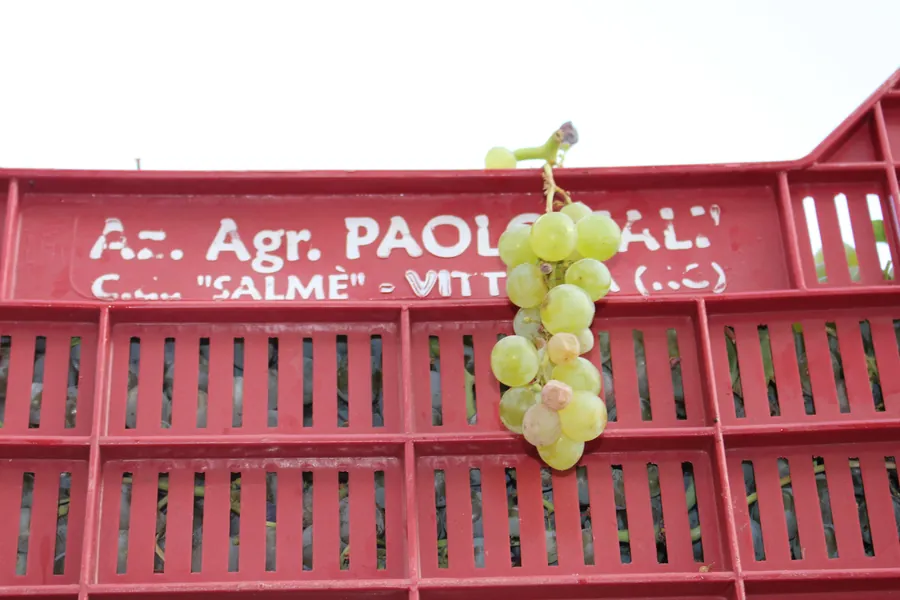
Grillo is a white grape born in Sicily from a cross of two island varieties, Catarratto and Zibibbo, as DNA analysis has confirmed. Tradition credits it to Baron Antonio Mendola, a nineteenth-century ampelographer.
For a long time it was the grape of Marsala; today it gives fresh, fragrant white wines with lively acidity and a savoury, Mediterranean streak.
Grillo on the sands of Vittoria
When I started, in 2001, I chose only native Sicilian grapes, and next to Frappato and Nero d’Avola I wanted Grillo. Ten kilometres from the sea, on the sands of contrada Salmè, it brings a different register to the cellar: white, savoury and Mediterranean. I also write about it on the page Vineyards on the sands of Vittoria.
The harvest: early and cool
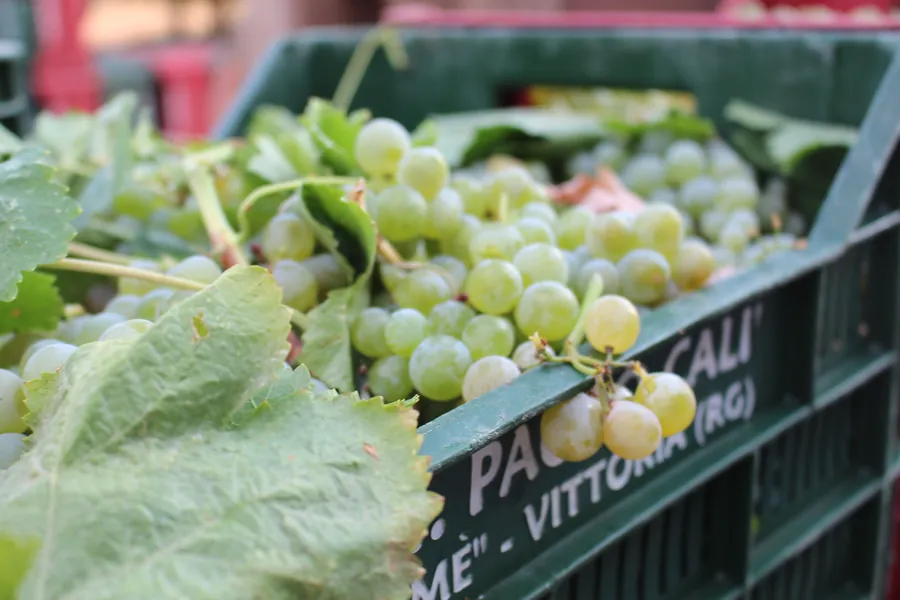
Grillo is picked at the right moment, without waiting for the grapes to become overripe: we look for the balance between sugar and freshness.
We harvest by hand in the first hours of the morning, while the grapes are still cool, in small crates that hold no more than 20 kilos, so the bunches reach the cellar whole and uncrushed. If picking goes on into the hot hours, the crates rest overnight in the cool of the cellar before they are processed.
In the cellar: cold, and no air
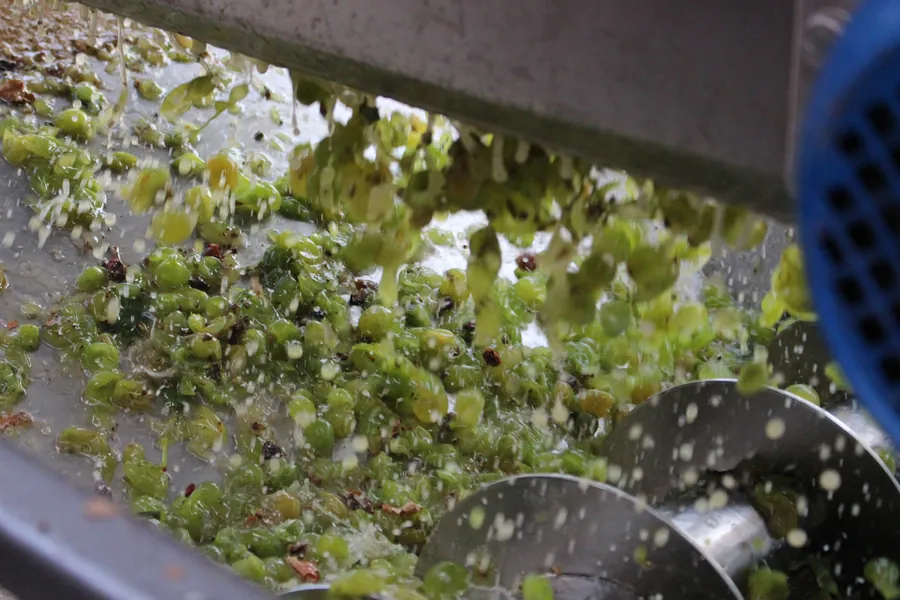
Grillo is a delicate grape: its aromas fear heat and oxygen. That is why at every step we keep it cold and protect it from contact with the air.
After destemming, the grapes spend a night in contact with their skins at 7–8 °C: this cold maceration draws into the juice the aromas held in the skins. The next morning the pressing is gentle, and for Blues I use only the free-run juice, the juice that flows on its own and with the first, gentle pressing.
The juice settles by itself, cold, over a day and a half or two; then it is racked off gently and ferments spontaneously, with no added yeasts, in stainless steel at a low temperature, between 16 and 18 °C, to keep the aromas. After fermentation the wine rests on its fine lees, which we stir back up once a week: this bâtonnage gives it roundness.
How to serve it
Chilled, between 8 and 10 °C. It is a wine for fish, raw, grilled or fried, but it also works with garden vegetables and fresh cheeses.