
Wine guide
Cerasuolo di Vittoria
Cerasuolo di Vittoria is the wine of my land. It is born from the meeting of the two historic grapes of south-eastern Sicily, Nero d’Avola and Frappato. Here I explain what it is, what “Classico” means and how I make it in my vineyards in contrada Salmè, in Vittoria.
Sicily’s only DOCG
Cerasuolo di Vittoria became a DOC in 1973 and a DOCG in 2005: it is still the only DOCG, the highest Italian appellation, in Sicily. The production area is wide and includes municipalities in the provinces of Ragusa, Catania and Caltanissetta, with Vittoria at its heart.
The name comes from “cerasa”, the local word for cherry, and recalls the colour of the wine: a bright cherry red. It should not be confused with Cerasuolo d’Abruzzo, a rosé made from Montepulciano: Cerasuolo di Vittoria is a red wine, from Nero d’Avola and Frappato.
Nero d’Avola and Frappato
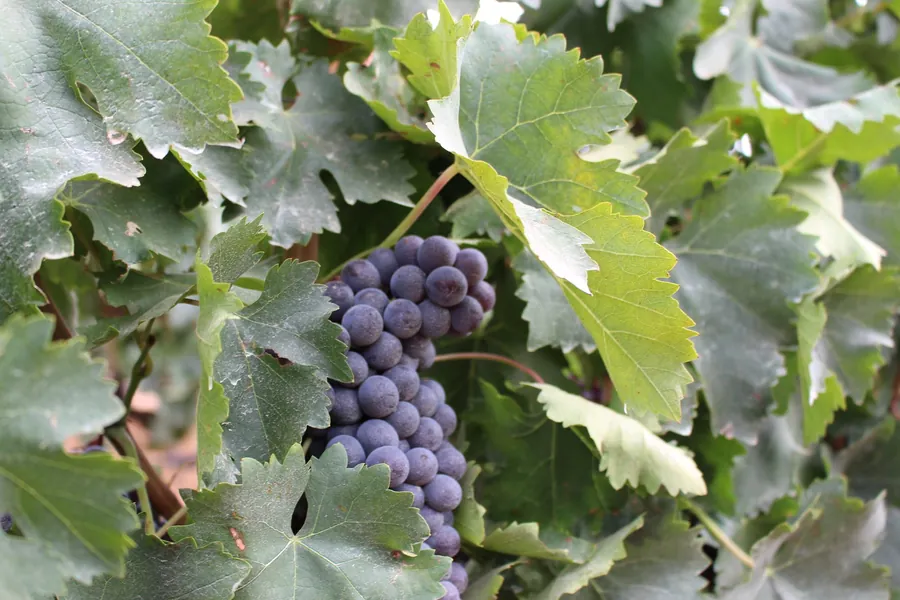
The rules allow 50 to 70% Nero d’Avola and 30 to 50% Frappato. Nero d’Avola brings colour, structure and depth; Frappato brings perfume, freshness and elegance. Cerasuolo is the balance between the two voices: a full red that is still easy to drink.
What “Classico” means
The word “Classico” is reserved for wines from the historic heart of the appellation, where my vineyards also lie. Cerasuolo di Vittoria Classico waits longer before release: not before 31 March of the second year after the harvest.
The sands of Vittoria
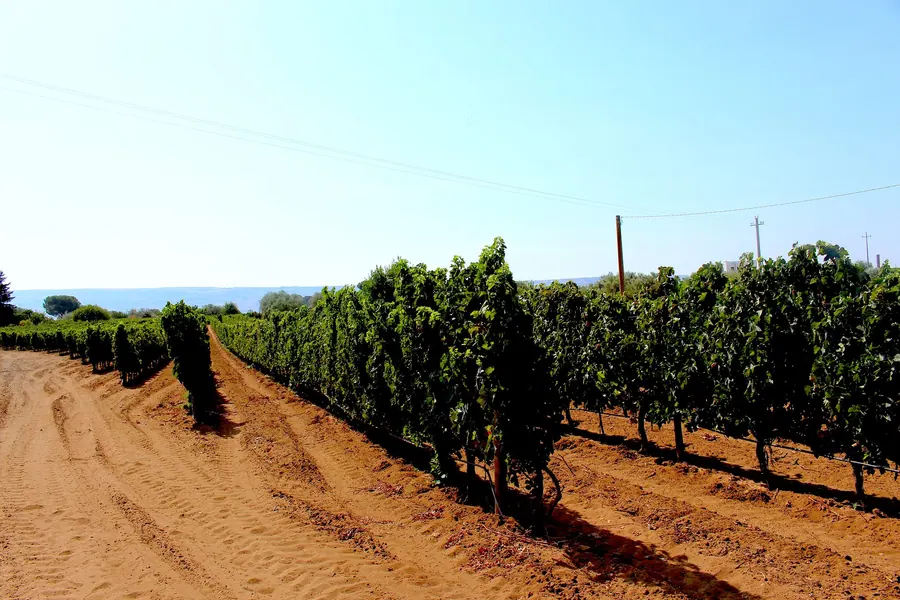
Ten kilometres from the sea, in contrada Salmè, my vines grow on sands of marine origin. Sand is loose and drains quickly; the summer sun warms the soil and the temperature changes a lot between day and night. In the plots of the crus the soils change again: pure sand, sand and clay, sand and limestone. I tell the whole story on the page Vineyards on the sands of Vittoria.
How I make it
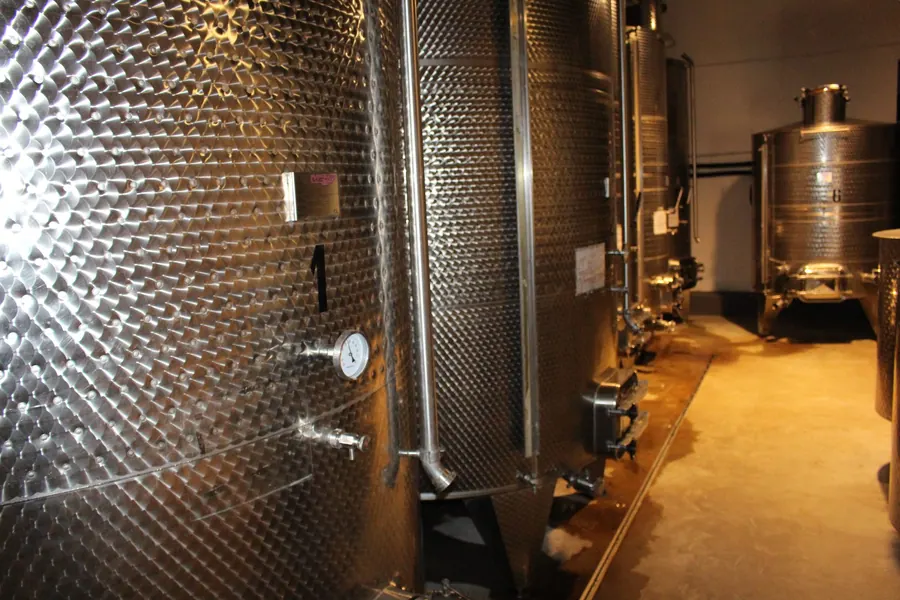
I farm the vineyards organically, I don’t use selected yeasts and I don’t filter the wines. Manene, my Cerasuolo di Vittoria Classico, is made from 60% Nero d’Avola and 40% Frappato. It is fermented in stainless steel and only part of the Nero d’Avola spends a short time in wood, so fruit and freshness stay at the centre.
The three crus, Pruvuletta, Forfice and Niscia, come from three plots where Frappato and Nero d’Avola grow side by side and are picked together. For them we choose only the best bunches, for health and ripeness.
Each plot ferments on its own, spontaneously, in small open vessels, with some whole bunches; the skins are pushed down gently, without breaking them. After a long maceration we keep only the free-run wine, the wine that flows on its own and with a gentle pressing, which then ages in cocciopesto amphorae, each cru kept apart.
The cocciopesto amphora
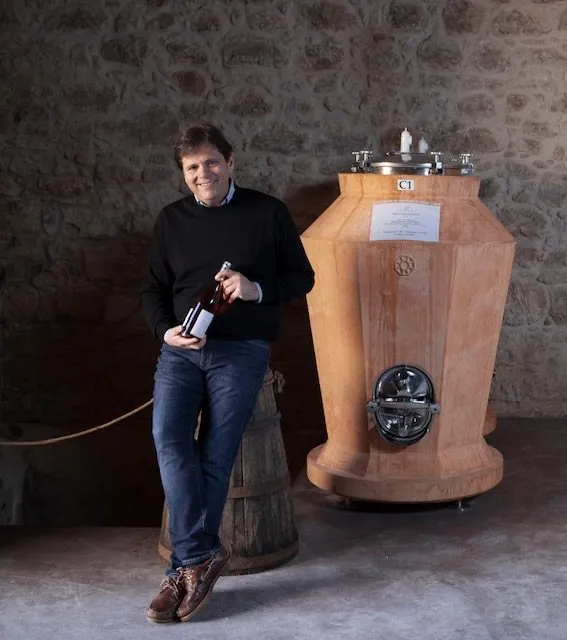
Cocciopesto is a very old material: the Phoenicians and the Romans used it for cisterns, tanks and floors that had to hold water. It is a mix of crushed terracotta, the “coccio pesto” of its name, and lime: it is not fired in a kiln, but sets and hardens like a mortar.
A terracotta amphora, by contrast, is clay shaped and fired at high temperature. Cocciopesto comes from a different process and a different mix, which gives thick, porous walls.
In a cocciopesto amphora the wine breathes slowly through the walls without taking aromas or flavours from the vessel, as it would from wood; the thick walls protect it from changes in temperature. For the crus it is the right choice: I want the glass to show the difference between three soils, not the vessel.
How to serve it
Between 16 and 18 °C: any warmer and it loses the perfume of the Frappato. It goes well with roast red meat, sausages and aged cheeses such as caciocavallo.